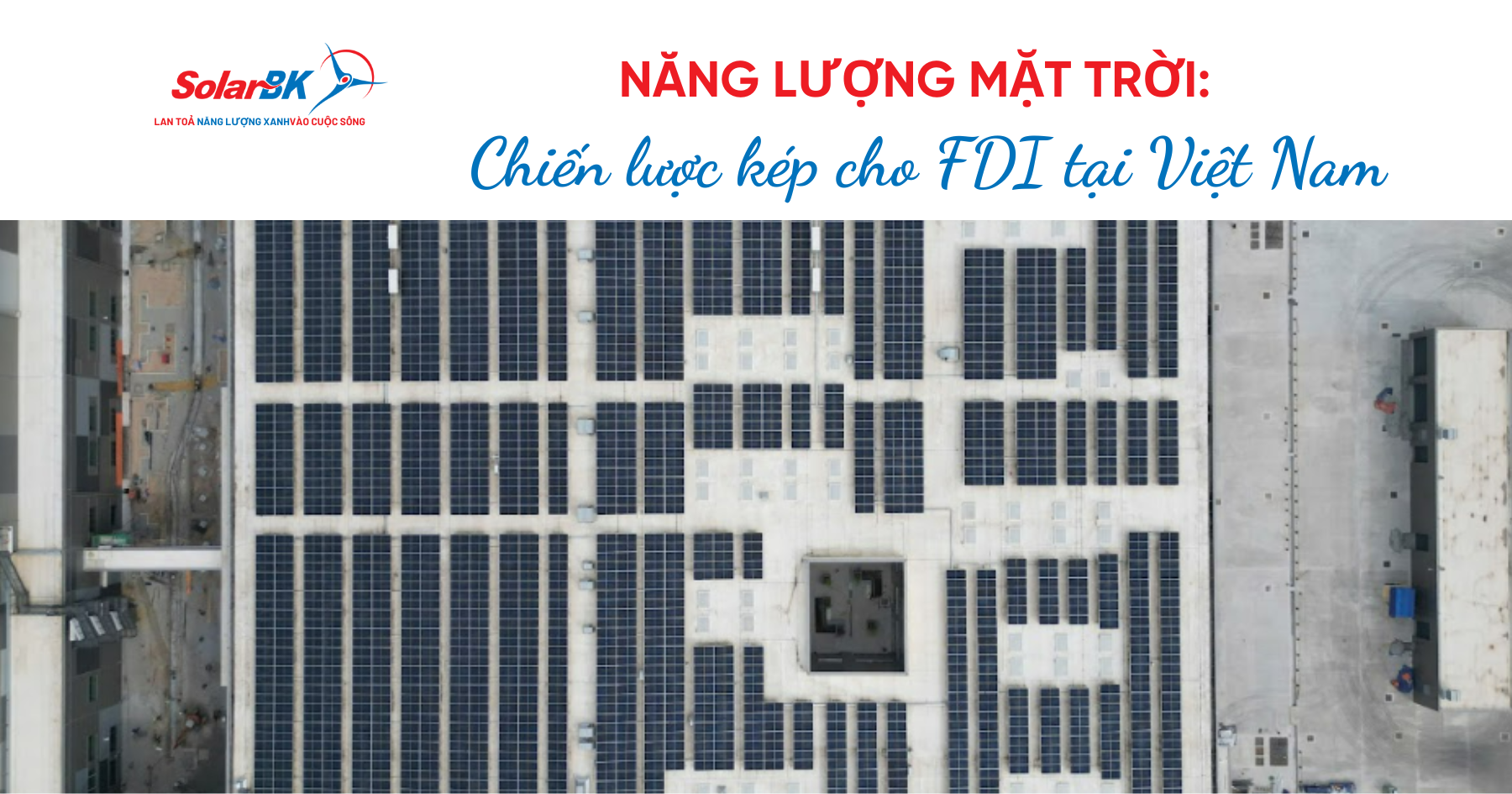
Inheriting research & development background since 1975, SolarBK is proud to be a pioneer in laying the groundwork for clean energy industry in Vietnam and is now a leading company in this field.
To carry out the mission of applying clean energy into everyday life, we have researched and developed many solutions to make Solar power energy more diverse, convenient and cheaper.
Energy Storage (BESS): The Piece Vietnamese Enterprises Cannot Ignore as 2026 Approaches
Publish date 26/12/2025
Share
As 2026 approaches, the energy context within Vietnamese enterprises is undergoing a dramatic shift. Electricity is no longer a fixed cost embedded in production, but a strategic factor directly tied to competitiveness and eligibility to participate in global supply chains.
ESG standards and the Carbon Border Adjustment Mechanism (CBAM) are moving from recommendations to enforcement. Based on upcoming EU policy directions, many Vietnamese exporters may be required to prove their share of clean electricity consumption between 2026 and 2028, rather than rely on self-declared reports as before.
Between 2021–2024, renewable energy investments slowed. But by 2025–2026, the landscape changes as foreign-invested manufacturers, firms in textiles, wood, logistics, electronics, and industrial parks begin treating clean energy as an operational capability, on par with technology, manpower, and management.
What is BESS and Why It Matters Now
Battery Energy Storage Systems (BESS) enable electricity generated from solar or wind to be stored and supplied when demand peaks or when the grid becomes stressed. According to Palma Energy, BESS holds significant advantages over diesel backup generators, operating cleanly, emitting no CO₂, stabilizing voltage, and maximizing self-generated renewable electricity.
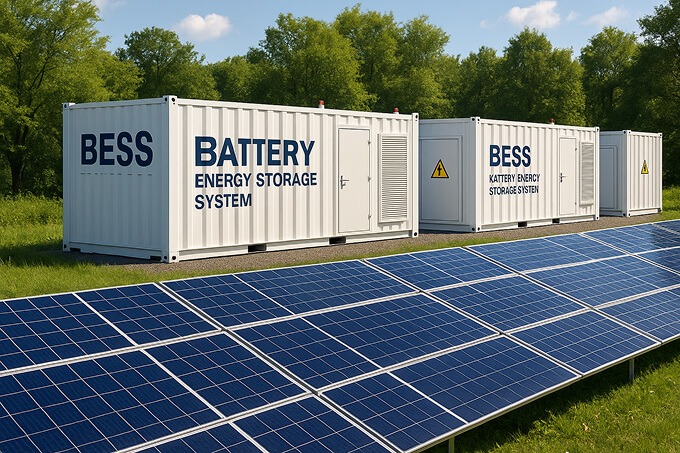
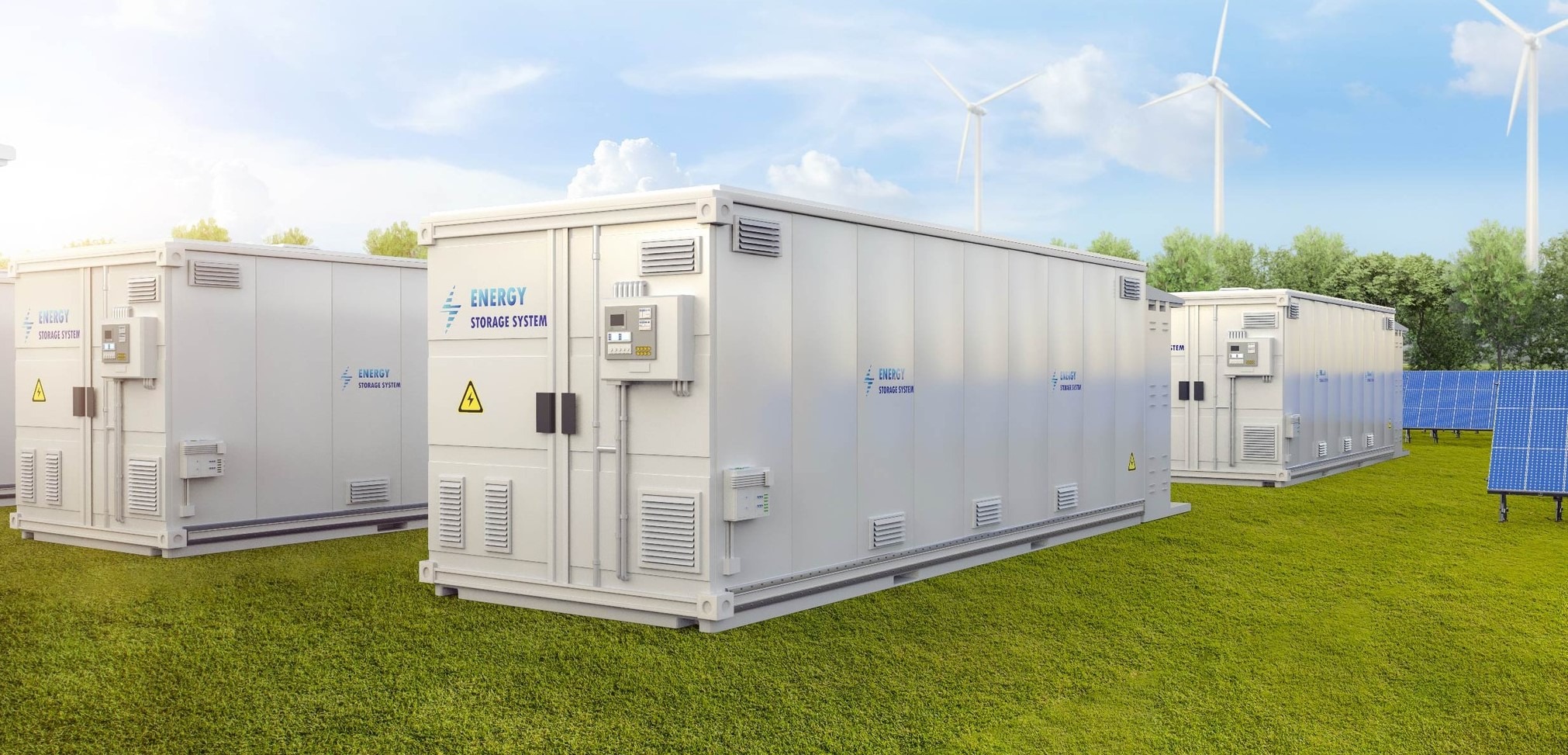
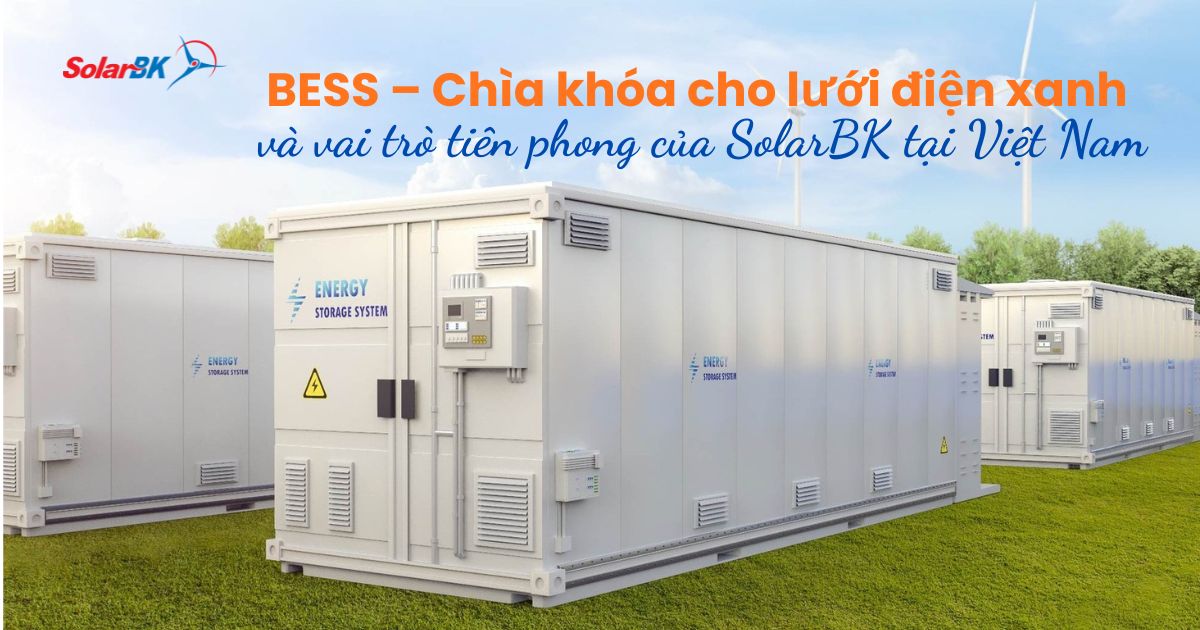
Battery Energy Storage System (BESS) – energy stored in battery form (illustrative image sourced from international media).
The global storage market is expanding rapidly. MarketsandMarkets projects the BESS market to reach USD 50.8 billion by 2025 and USD 106 billion by 2030. The International Energy Agency (IEA) reports that lithium-ion battery costs have dropped from over USD 1,000/kWh in 2010 to around USD 140/kWh in 2023. IRENA data shows global annual storage deployment increasing from 0.1 GWh to nearly 96 GWh between 2010–2023—proving that energy storage has moved from “future technology” to “existing infrastructure.”
In Asia, Japan and Singapore have already included storage integration into policy requirements, mandating minimum BESS in certain industrial zones and energy projects, whereas Vietnam currently lacks such mandates, creating a policy lag that could become either a risk or an opportunity depending on how fast Vietnamese businesses act.
Why BESS Arrives at the Moment Vietnam Needs It Most
Vietnam’s production loads fluctuate by shift, season, and industry. Electronics, textiles, cold storage, and logistics typically operate at their highest load at night, when solar does not generate energy. According to the Vietnam Institute of Energy, solar-only systems are no longer sufficient to ensure stable manufacturing operations unless paired with storage.
SolarBK’s Solar + Battery Energy Storage System (BESS) – a pioneering operational model built in Vietnam to generate the first localized data set for enterprise-level energy storage
From 2026, clean electricity verification is expected to tighten. Several European brands have already begun requiring Vietnamese suppliers to provide real-time energy data for carbon audits. In this context, BESS becomes a clean-electricity memory: recording, storing, and validating renewable electricity used by the hour, rather than relying on paper-based commitments.
Many rooftop solar systems currently waste energy at noon when excess cannot be sold. Industrial rooftop systems experience 15–25% excess generation in sunny months. BESS stores this surplus and releases it during peak-load hours, improving investment returns and reducing grid-purchased electricity.
From “Energy Cost” to “Energy-Based Competitive Advantage”
Electricity used to be a cost variable enterprises simply accepted, prices rise, businesses pay; grid shortage means production waits. With BESS, the power balance changes. For the first time, enterprises can operationalize energy: turning load profiles into optimization data, turning clean power into a negotiable asset, and turning energy infrastructure into a strategic lever.
In supply-chain negotiations, energy is becoming a contract-based condition, if a minimum clean-power threshold is not met, enterprises may not qualify for bidding, regardless of price or capacity. A factory with storage can maintain uninterrupted production, guarantee delivery timelines, and manage carbon footprints at the product level.
Conversely, a factory without BESS remains fully dependent on the grid. A few hours of outage could halt production, damage inventory, or worst—result in loss of multi-year contracts. As clean-electricity proof becomes mandatory, the absence of storage means the absence of evidence—and in the near future, lacking evidence means lacking permission to participate in the game.
Vietnam BESS Market: Status and Outlook
Vietnam’s BESS market remains nascent. Power Development Plan VIII targets 10,000–16,300 MW of storage integration by 2030, equivalent to 5.5–6.9% of total installed capacity. Yet by early 2025, PECC3 reports that Vietnam has only a few dozen MW in pilot form, with almost no utility-scale projects. The gap between ambition and reality means the market is not yet booming, but also signals a massive first-mover advantage.
Given capital barriers, ESCO and PPA models, where investors finance the infrastructure and enterprises pay for energy usage, are emerging as viable entry pathways. Through such models, enterprises can “buy energy autonomy” rather than “buy batteries”.
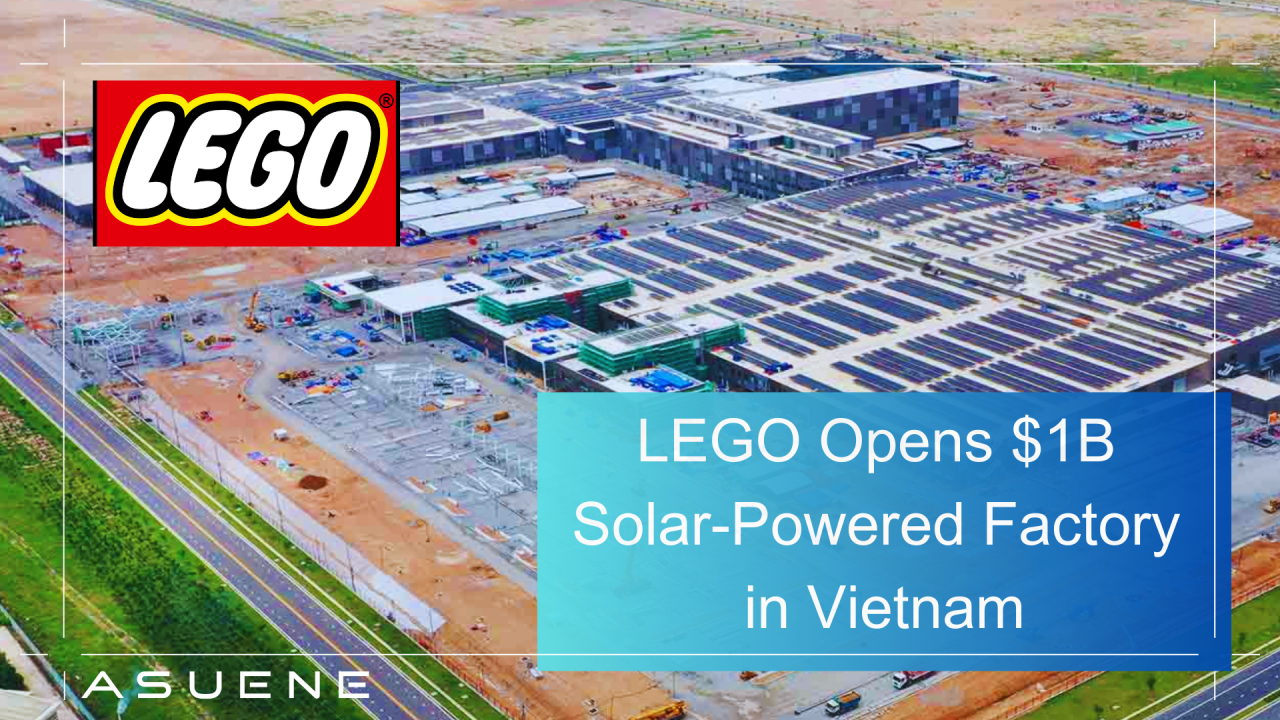
A notable real-world example is the LEGO manufacturing plant at VSIP III, Binh Duong, where solar generation integrated with BESS is deployed as a core component of net-zero operations. This demonstrates that the technology is ready for international-standard production environments in Vietnam.
Where Should Vietnamese Enterprises Begin?
To move energy storage from theory into real manufacturing practice, Vietnam needs pioneers. One of them is SolarBK, a leading clean-energy company in Vietnam, providing end-to-end solar solutions — from system design, equipment supply, and installation to smart energy monitoring and optimization services.
One important milestone in this journey came on June 30, 2023, when SolarBK signed a strategic cooperation agreement with Vingroup to develop a “Make in Vietnam” Solar + BESS solution. The first 300 systems were installed in 2023, creating a foundation of operational data and real-world application models — paving the way for broader adoption from 2024 onward. Prior to that, SolarBK also deployed 14 MWp of rooftop solar across 50 Vincom commercial centers nationwide, demonstrating its capability to implement large-scale projects at international standards.
SolarBK also contributed to designing the solar-plus-storage solution for LEGO VSIP III. Its role is not only technical deployment, but transforming BESS from an imported concept into a data-proven operating model, laying the foundation for the Vietnamese storage market. Critically, SolarBK holds the first localized Solar + BESS operational dataset, which will shape how enterprises calculate storage ROI through the next 3–5 years.
SolarBK also contributed to the design of the solar power + BESS integrated solution for the LEGO factory located in VSIP III, Binh Duong
Not every enterprise must deploy a full-scale system immediately, but all must start with one step: establishing the storage question and preparing energy data. Early movers gain time to test, adjust, and prepare before regulations shift to mandatory enforcement.
Recommended roadmap: assess load by shifts, identify spikes, evaluate existing solar surplus or deficit, and calculate cost-risk trade-off between investment and potential disruption. For those not ready to invest, ESCO/PPA offers a practical entry point.
BESS – The Second Wave of Enterprise Energy
2026 will force Vietnamese enterprises to answer a strategic question: can they still compete globally if they remain dependent on grid power? Solar energy was the first wave bringing Vietnamese businesses closer to clean power. BESS may become the second, unlocking autonomy, resilience, and ESG-based proof.
If 2026 is the foundation year, then the first step, no matter how small, must begin now. Because in a rapidly shifting market, the prepared are not just safer—often, they are the only ones still positioned to choose.
If Vietnam does not solve storage within the next 2–3 years, export disadvantages will not come from labor costs, but from electricity, an element few have yet considered.
With localized operational data and full-stack solution capability, SolarBK can act as a strategic partner enabling enterprises to take their first steps, without committing major capital on day one.
This is the moment for every business to ask:
Do we have load-profile data? Do we know what percent of our power is clean? And who is the partner we trust to test storage with us?
The answers to these questions will decide whether a business will lead or be left behind in the new energy era.