Inheriting research & development background since 1975, SolarBK is proud to be a pioneer in laying the groundwork for clean energy industry in Vietnam and is now a leading company in this field.
To carry out the mission of applying clean energy into everyday life, we have researched and developed many solutions to make Solar power energy more diverse, convenient and cheaper.
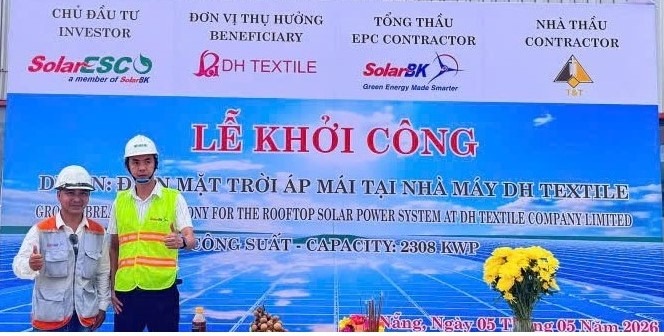
Groundbreaking Ceremony for the 2.308 MWp Rooftop Solar Project at DH Textile
Publish date 07/05/2026
Share
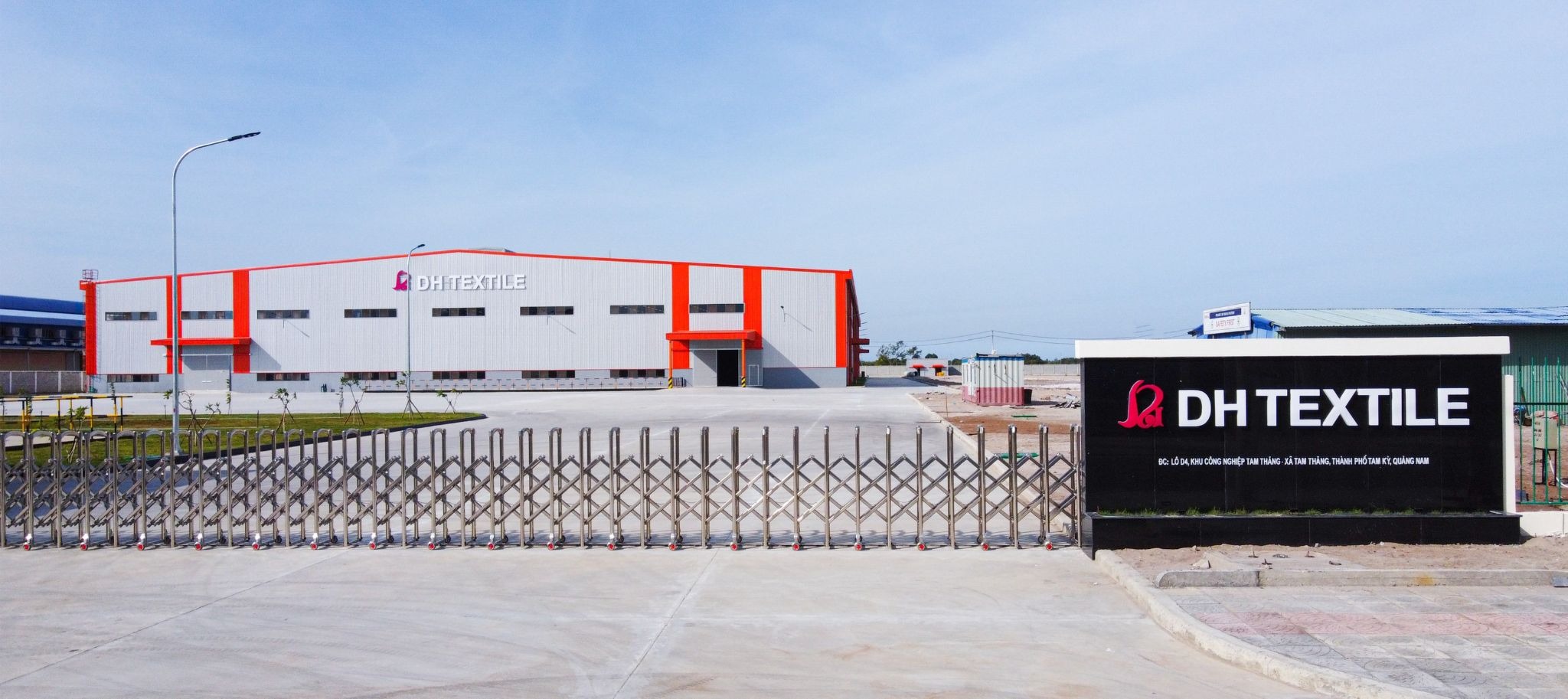
On May 5, 2026, the 2.308 MWp rooftop solar project at DH Textile factory officially broke ground in Da Nang, Vietnam. The project is invested by SolarESCO, with SolarBK serving as the EPC contractor and T&T as the construction partner.
As global brands continue to tighten requirements on carbon emissions, renewable energy adoption, and supply chain transparency, rooftop solar is increasingly becoming part of the competitive advantage for export-oriented manufacturers.
Particularly in the textile industry, a sector with high electricity consumption and growing ESG pressure, the challenge today is no longer limited to reducing electricity costs, but extends to maintaining stable green operations and meeting international supply chain standards.
DH Textile specializes in manufacturing knitted fabrics, woven fabrics, and polyester textiles for export markets, leveraging South Korean technology and expertise.
From Cost Optimization to ESG Capability Enhancement
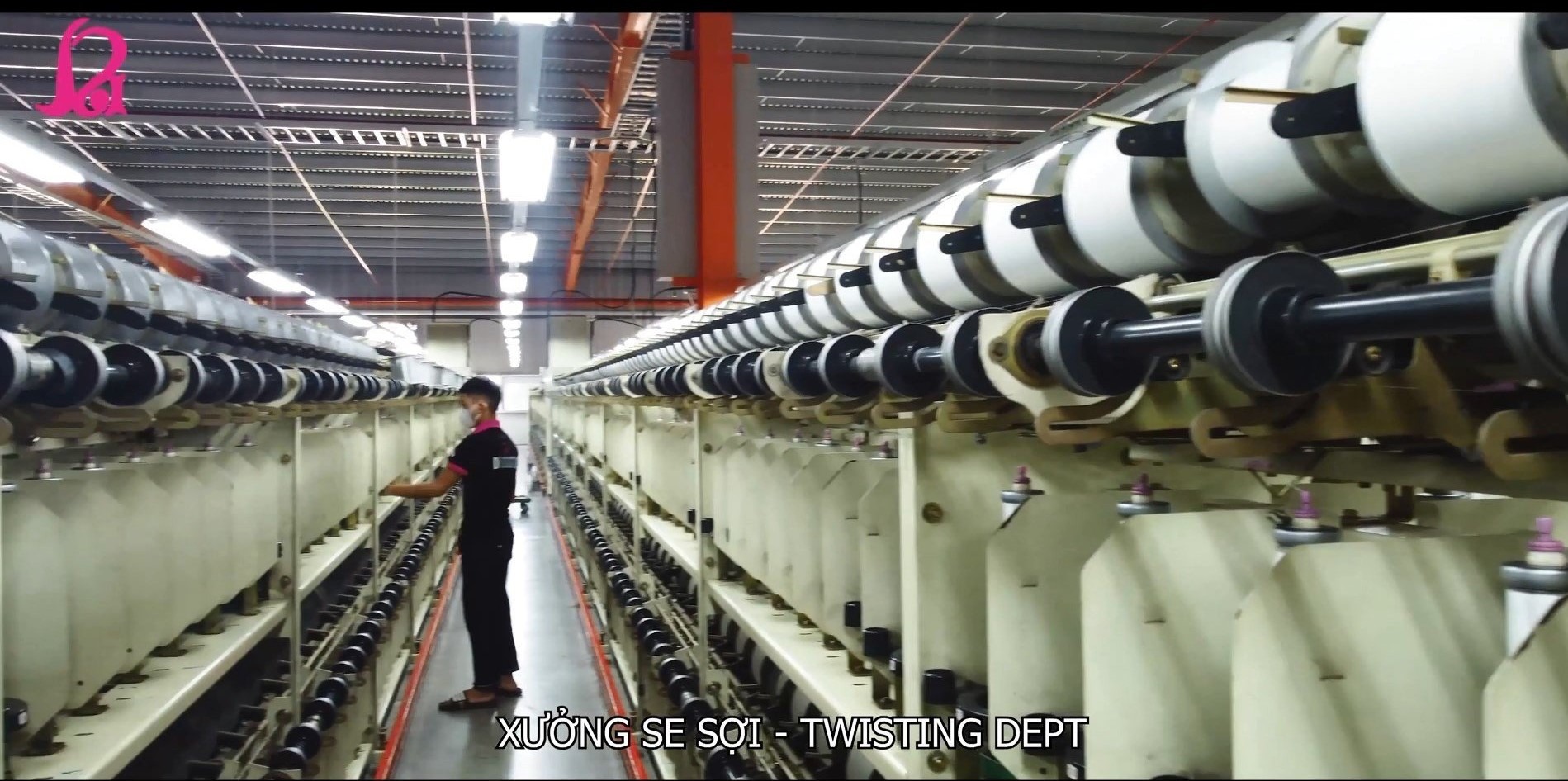
DH Textile specializes in manufacturing knitted fabrics, woven fabrics, and polyester textiles for export markets, leveraging South Korean technology and expertise. Established in 2007, the company operates under the GAONNURI TEX and GAOTEX brands, with a production capacity exceeding 40 million yards of fabric annually.
In recent years, investment priorities among FDI manufacturers have shifted significantly. While rooftop solar was previously viewed primarily as a cost-saving solution, companies today are placing greater emphasis on ESG compliance, carbon accounting, and the share of renewable energy used in manufacturing processes.
Within global supply chains, international brands are increasingly evaluating not only product quality, but also the carbon footprint and renewable energy ratio behind the manufacturing process itself.
As a result, industrial solar projects are no longer assessed solely based on installed capacity, but also on their ability to optimize load management, maximize energy utilization efficiency, and ensure long-term operational performance.
With a capacity of 2.308 MWp, the system is expected to generate approximately 3 million kWh of clean electricity annually, contributing to a reduction of around 1,978 tons of CO₂ emissions per year, equivalent to planting nearly 99,000 trees annually.
Established in 2007, the company operates under the GAONNURI TEX and GAOTEX brands, with a production capacity exceeding 40 million yards of fabric annually.
Nearly Three Months of Technical Optimization for a Complex Load Structure
The contract was signed in December 2025 following nearly three months of site surveys, load assessments, and technical solution optimization.
DH Textile was introduced to SolarBK through a manufacturing enterprise that had previously collaborated with SolarBK on industrial rooftop solar projects and experienced stable operational performance in practice. The project referral within the export manufacturing community highlights how implementation credibility and proven operational effectiveness are becoming increasingly important factors when industrial manufacturers select energy partners.
The project’s greatest technical challenge lies in the factory’s load structure.
DH Textile currently operates two transformers, two electricity meters, and separated load systems. Under this configuration, allocating and balancing rooftop solar generation becomes significantly more complex compared to conventional centralized load systems.
Without proper optimization, the system could face load imbalance, reduced self-consumption rates, or excess solar generation during periods of fluctuating demand.
To address this challenge, the engineering solution was designed to synchronize operations between the two electrical systems, helping improve on-site solar consumption, optimize operational efficiency, and maintain long-term system stability.
On May 5, 2026, the 2.308 MWp rooftop solar project at DH Textile factory officially broke ground in Da Nang, Vietnam
Industrial Solar is Entering an “Operational Optimization” Phase
Beyond load optimization, the project also integrates multiple technical solutions tailored for Central Vietnam’s industrial environment, including roof reinforcement for enhanced storm resistance, real-time monitoring systems, and digital performance analysis to detect operational risks early.
The project is also designed to comply with increasingly stringent ODS requirements and energy governance standards among export-oriented manufacturers.
According to observations from the industrial rooftop solar market, these requirements are becoming increasingly common in textile and export manufacturing projects, where operational continuity and load stability are critical priorities.
This shift also reflects a broader transition in the industrial solar market.
Today, manufacturers are no longer simply looking for large-capacity solar systems. Instead, they are seeking partners with proven implementation capabilities, strong technical expertise, and experience in handling complex industrial operating models.
As the global textile industry continues to strengthen ESG and carbon reduction requirements, rooftop solar is gradually evolving from a “cost-saving solution” into a “strategic infrastructure asset” for export manufacturing operations.
Is your business looking to optimize energy costs, increase renewable energy usage, and strengthen ESG performance in manufacturing? Leave your contact information and SolarBK’s experts will provide a rooftop solar solution tailored to your factory’s operational model and load profile.